With business expansion, challenges increase. The more staff, the higher the number of customer orders, the longer processes, and the greater the number of software solutions, which can mean increased costs. Numerous businesses use standalone apps or manual workflows, which cut down productivity, cause inefficiency, and drive up administrative costs. Growth is essential for businesses to be competitive, and they need technology that helps them achieve it while optimizing costs.
More than half (57%) of organisations have already automated one or more business processes, and more and more organisations are investing heavily in automation to improve operational efficiencies and reduce costs.
Businesses can leverage repetitive task automation, centralization, reduction of redundancies, and better utilization of resources with custom software. Dean Infotech develops solutions according to the needs of the company that will help to reduce the overall cost for the company and enhance productivity and customer satisfaction in the long term.
Why Operational Costs Increase in Growing Businesses
As a business expands, it's expected that the day-to-day tasks of your business operations will become more complex. Other customers, other departments, and other business processes have to be managed efficiently.
Organisations can find themselves with duplicated work, miscommunication and higher admin costs if these systems are not in place. In addition, most companies use several stand-alone solutions to complement their sales, financial, HR, customer service and operations.
When systems aren't connected, there's a problem with data silos and with collaboration and manpower. These delays can affect workflows and contribute to the risk of costly errors.
Another major contributor to operational costs is repetitive manual activities. Valuable employee time is spent on tasks such as data processing, reporting, approvals, follow-up, invoicing, and customer follow-ups. The more these repetitive tasks are needed, the more costly they become and, as a result, it is vital to have automation and custom software development for sustainable business growth.
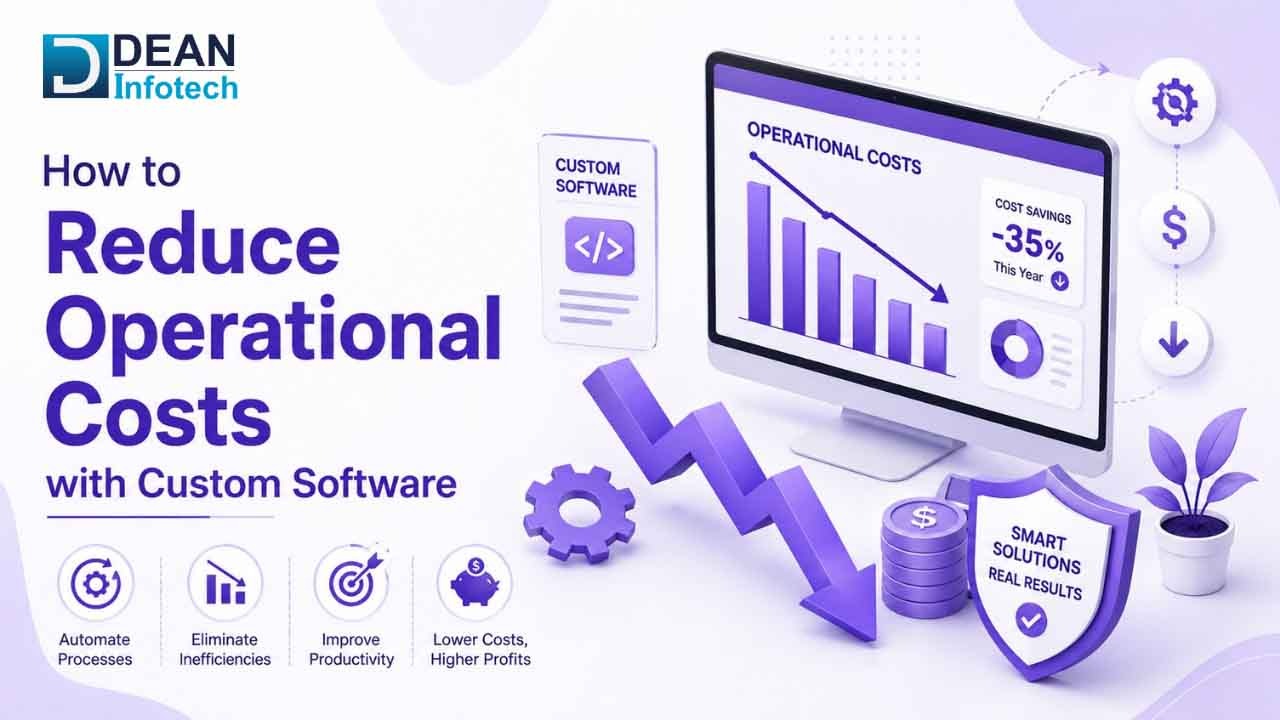
In addition, rapidly growing businesses often face challenges concerning the ineffective distribution of resources and lack of visibility of their operational effectiveness. The lack of centralized solutions does not allow managers to supervise performance, monitor efficiency, and discover areas for saving costs. In addition, persistent ineffective decision-making, unreliable data, and disconnected communications make the situation worse. In the course of their development, companies face exacerbation of these challenges: although once efficient business functioning is still profitable, it becomes impossible to satisfy growing customer needs.
How to Reduce Operational Costs with Custom Software
Businesses can achieve these benefits with custom software, which can help them streamline their processes, automate repetitive tasks, and optimize their operations. Unlike generic software, custom applications can be designed to grow with your business and will integrate with your current applications.
Automate Repetitive Business Processes
Manual tasks for data entry, generation of invoices, approvals, report generation, and customer follow-up are very time-consuming and costly. These repetitive activities can be automated by having custom software, and this will save man-hours and reduce human involvement and errors.
Centralize Business Operations
A significant number of businesses are using different types of integration solutions to manage their customers, accounts, HR, inventory, and project management. They combine them all in one place with custom software, which avoids duplication of data entry to give teams a single source of truth. This enhances collaboration and cost savings in software management.
Improve Employee Productivity
Time is wasted navigating from one application to another, looking for information, or wasting time on repetitive administrative tasks. Optimizing workflows, providing easy business information access, and automating repetitive tasks enable teams to work faster and more efficiently with the help of custom software.
Reduce Software Licensing and Maintenance Costs
There were multiple software packages that offered the same functionality, and many organisations subscribed to multiple packages. A customized software solution may be able to involve multiple applications and offer each of the functions as an integrated solution that cuts down on recurring application licensing fees and long-term maintenance fees.
Minimize Human Errors
Manual tasks create the potential for inaccuracies in data entry, invoicing, stocking, and customer records. Custom software can check data and execute calculations, as well as optimize processes, reducing human error, saving costs, and ensuring accuracy.
Improve Data Visibility and Decision-Making
Business data is integrated into real-time dashboards and reports through the use of custom software. The managers are able to see the operational performance, customer behavior, financial information, and resource usage in real time, enabling them to make informed and timely business decisions.
Scale Operations Without Proportionally Increasing Costs
When businesses expand, it's common that the complexity of operations grows. Custom software is designed to grow with the company, enabling businesses to handle more customers, more people, and more business processes without having to incur much additional cost.
Key Considerations When Investing in Custom Software
Investing in custom software requires careful planning to ensure the solution addresses your business needs and delivers long-term value. Before starting development, consider the following factors to make informed decisions and maximise your return on investment.
Identify the Problems to Solve
Clearly define the operational challenges you want the software to address. These may include repetitive tasks, inefficient workflows, disconnected systems, data management issues, or manual errors. Understanding these problems helps developers build a solution that supports your specific business requirements.
Set Clear and Measurable Goals
Establish clear objectives before beginning the development process. Your goals may include reducing operational costs, improving productivity, speeding up processes, or enhancing customer experiences. Measurable goals also make it easier to assess whether the software is delivering the expected results.
Priorities Automation Opportunities
Identify repetitive and time-consuming tasks that can be automated. Automating activities such as data entry, report generation, approvals, or notifications can reduce manual effort and minimise errors. This allows employees to spend more time on strategic and value-driven responsibilities.
Plan for Business Growth
Choose software that can scale as your business expands. The solution should be able to support more users, higher data volumes, additional features, and changing operational needs. Scalable software can reduce the need for costly redevelopment in the future.
How to Measure the ROI of Custom Software
Reducing operational costs is only one way to evaluate the value of custom software. Businesses should also assess how the solution improves productivity, reduces errors, supports faster processes, and contributes to long-term growth. Here’s how you can measure the ROI of custom software:
Reduction in Manual Work: Compare the time employees spent on repetitive tasks before and after implementing the software. Reduced manual effort can help lower administrative costs and allow employees to focus on more important business activities.
Improved Employee Productivity: Measure whether teams can complete tasks faster, manage higher workloads, or reduce delays after using the software. Higher productivity can help businesses achieve more without increasing operational expenses proportionately.
Lower Software and Maintenance Costs: Track savings from consolidating multiple tools or reducing reliance on separate software subscriptions. A custom solution may lower recurring licensing, integration, and maintenance costs over time.
Fewer Errors and Rework: Assess changes in data accuracy, processing errors, customer issues, or time spent correcting mistakes. Reducing errors can minimise financial losses, improve operational efficiency, and support better service delivery.
Long-Term Business Value: Consider how the software supports scalability, customer satisfaction, faster decision-making, and future growth. These long-term benefits can provide a clearer view of the overall return on investment.
Conclusion
Saving money is not the only way to save money; it's about being more efficient by using smarter technology. Custom software can streamline manual tasks, centralize operations, eliminate repetitive tasks, and increase overall productivity. Based on the business requirements, custom applications are developed that provide flexibility, scalability, and value.
Custom software allows the organization to continue to grow, reduce resource waste, increase efficiency, and make better decisions. Together, with the right implementation strategy and an experienced technology partner such as Dean Infotech, enterprises can cut operational expenses and create a scalable digital foundation that will help shape sustainable growth and long-term success.
Get in touch with our team today!
Need expert help with your next project?
Get expert guidance across Salesforce, HubSpot, GoHighLevel (GHL), AI, and web development — tailored to your business.









Comments