Nonprofit organizations must confront issues of donor, volunteer, beneficiary, sponsor, and community relations, and often limited resources. As these relationships develop, it is challenging to keep accurate records, monitor engagement, and coordinate communication via spreadsheets and uncoordinated systems. With a CRM such as HubSpot, you can have a single place to handle all of these interactions and support your fundraising and outreach efforts.
According to Forbes, only 11% of nonprofits surveyed said they managed their digital resources “highly effectively,” highlighting the need for better technology and structured digital systems.
We, at Dean Infotech, can not only manage HubSpot's CRM and marketing automation, segmentation, workflows, and reporting, but more. When done right, this can help cut down on manual effort, enhance donor experiences, and foster longer-lasting donor relationships.
What Is HubSpot for Nonprofits?
Nonprofits usually have a variety of information to manage across multiple channels. Donors can connect via social media, email, forms, in-person events, or their websites. Beneficiaries and volunteers can participate in different programs and through different methods of communication. If a central system is lacking, then important information can become lost, duplicated, and inaccessible.
The existence of these relationships is one of the sources of information in a CRM. Teams are able to track interactions, schedule contacts, track engagement, and know where supporters are on their journey. This is particularly helpful for non-profit organizations because the donors' connection can last for years and involve several interactions.
All marketing, sales, fundraising, and service can be connected to one platform in HubSpot. A free solution for donor management, fundraising campaigns, engagement, and reporting for non-profit organizations.
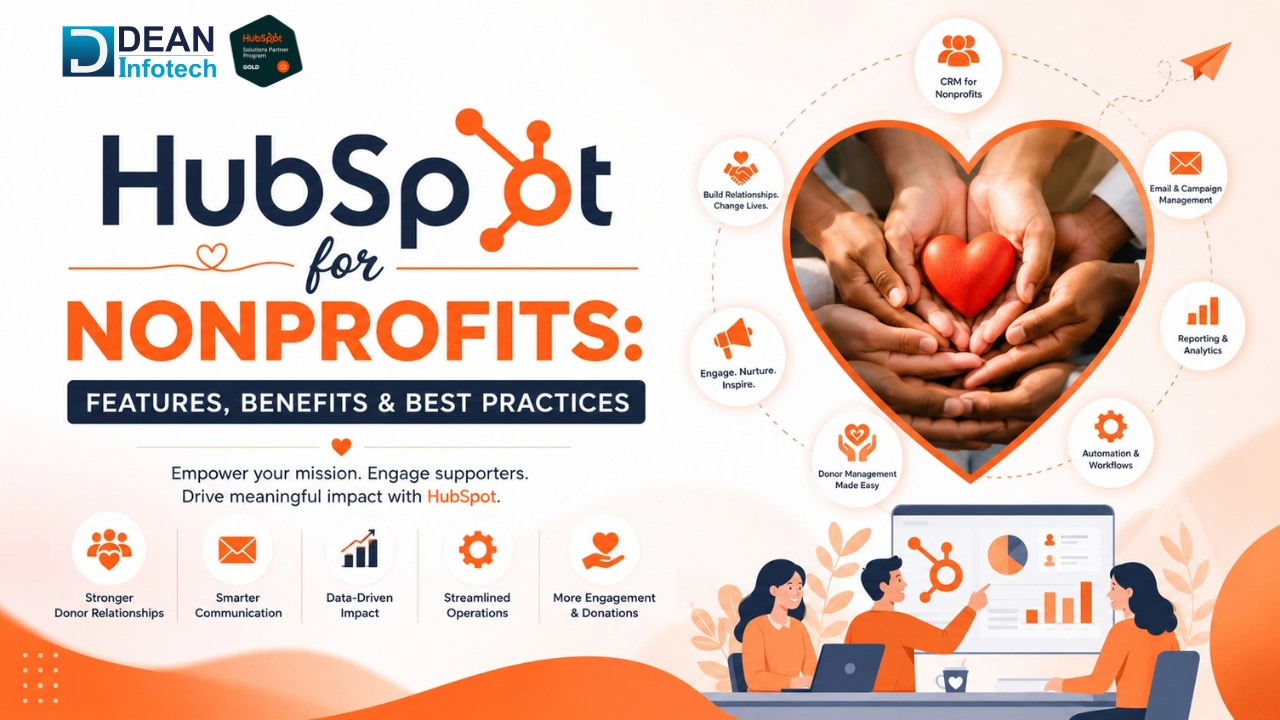
Benefits of Using HubSpot for Nonprofits
With HubSpot, nonprofits can manage donors, inspire donors, market and automate donor communications, and measure donor performance. The platform can streamline workflows and provide teams with a better overview of supporter relationships.
Centralized Donor/Contact Management
HubSpot helps nonprofits keep all their contact data and interactions in a single, centralized CRM. Teams can set up donors, volunteers, subscribers, event attendees, and other contacts and monitor their engagement history. This means that there's a lower reliance on spreadsheets that are not connected and that information is more easily accessible for teams.
Automates Repetitive Communication
Nonprofits will typically send confirmation of the donation, a thank-you letter, a newsletter, and reminders and follow-up emails about events. These communications can be set up to be triggered by certain contact actions or contact lifecycle stages with HubSpot's automation and workflow features. This helps them to stay on the same page without having to account for all the details of each interaction.
Enables Personalized Supporter Engagement
All supporters are not created equal. With HubSpot, nonprofits can segment contacts based on engagement, interests, interactions, and even donation history and send more relevant messaging to them. This can make outreach more relevant and can be beneficial to forming positive long-term relationships.
Improves Reporting and Decision-Making
Nonprofits enjoy greater visibility of their work and supporter data with a centralized CRM. Reporting and Analytics will help teams to understand the performance of their campaigns, engagement trends, and more. Greater transparency can help increase your understanding of the information you need to use when decisions are made about fundraisers, communications, and resource allocation.
Reduces Manual Tracking
With a good CRM system in place, data entry and manual tracking can be reduced. This is particularly beneficial if you have a small staff for your nonprofit organization and wish to reach out to more people without burdening your organization with more administrative responsibilities.
How HubSpot Supports Nonprofit Fundraising and Donor Engagement
Supporting knowledge and communication is essential in the fundraising process. With HubSpot, nonprofits can pool their donor information, segment their audience, track which interactions lead to donations, and automate the supporter journey.
For example, a group could have an onboarding email for new donors, a thank-you email for donors, an invitation to attend a fundraiser, or a reactivation campaign. A second advantage of segmentation is the capacity to send various messages to various donor segments, such as a recurring donor, a one-time donor, an event donor, and a lapsed donor.
The nonprofit version of HubSpot provides personalization, email marketing, segmentation, automation, A/B testing, and analytics. These can help organisations move from a broad-brush approach to communication and help them make communication with supporters more meaningful.
It's also important to have clean data. The global nonprofit organisation with which Dean Infotech collaborated on a contact restructuring, data cleansing, list segmentation, form creation, and source identification project at the global level. The system that was created provided complete visibility into the interactions with donors and the community.
HubSpot Features for Nonprofits
Nonprofits can leverage the right HubSpot features to create a unified supporter management, campaign, communications, and workflow system.
CRM and Contact Management: Nonprofits can keep donor, volunteer, subscriber, and other contact information, and all interaction histories in one place.
Marketing Automation: Automate emails, nurture workflows, event messaging, and re-engage supporters.
Segmentation: Segments can be formed according to supporter characteristics, interests, involvement, or previous interactions.
Forms and Lead Capture: HubSpot forms can gather structured data from a website and submit it automatically to CRM records.
Reporting and Analytics: The nonprofits will be able to track engagement and campaign performance and learn what works.
Integrations: HubSpot can integrate with different business systems and applications to minimize manual data entry and streamline work processes. Dean Infotech provides HubSpot integration with CRM, Customer support, Project Management, Social media, API, and Custom integrations.
Workflows: Automated workflows can trigger actions when a certain condition occurs, for example, contact properties or interactions.
Best Practices for Implementing HubSpot in a Nonprofit
Setting up HubSpot is not the only step to successfully implementing it. Before nonprofits start developing new processes, it's important they know what existing processes are in place, clean up their data, identify how contacts would be best organized, and develop workflows according to the true needs of their business.
Define CRM Objectives
Outline the organization's expectations for HubSpot before implementation. The goals can be more visibility, reduced manual tracking, higher donor involvement in fundraising efforts, or better reporting.
Clean Existing Data
Examine the spreadsheets, databases, and other sources before importing. Eliminate redundant data, normalize data, and create strict naming rules. Data cleanup and de-duplication were used specifically by Dean Infotech to build a reliable centralized contact system, as a nonprofit implementation.
Create Meaningful Contact Segments
Create classification groups to describe the ways in which the nonprofit functions. Different communication and tracking methods may be necessary for donors, volunteers, subscribers, event participants, and beneficiaries.
Build Relevant Workflows
Complete repetitive tasks for cause and effect. Incorporate authentic workflows such as donor thanks, event reminders, follow-ups, and re-engagement campaigns.
Integrate Existing Systems
Connect HubSpot with relevant sites, forms, communication platforms, payment platforms, etc., as appropriate. Integrations can also help to simplify data input and improve team communication.
Team Training
The employees should understand the format of the records, the work process, and how the data is entered and maintained. Training helps to enhance adoption and data consistency.
Review and Optimize Regularly
It is important to review workflows, reports, contact properties, and automation regularly to find ways to make it better.
Read More Blog Here: HubSpot Integration Guide: Everything You Need to Know
How to Measure the Success of HubSpot for Nonprofits
A CRM is an investment, so nonprofits must set up some measurable metrics to know if HubSpot is working towards improving operations and engagement. The success of the new system should be measured by the organization's declared objectives and aims and not by the number of features that it has incorporated.
Measure Donor Engagement
Monitor metrics like email engagement, repeat donations, donor retention, campaign involvement, and email responses to fundraising messages. Variations in these indicators may help indicate whether and how the engagement of supporters through greater personalisation and consistency is being strengthened.
Track Fundraising Performance
Organizations can see how many items are donated, the effectiveness of campaigns, conversion rates, recurring donations, and revenue from multiple campaigns. These metrics can be used as a tool to review in the future and assess which fundraising activities are successful.
Measure Operational Efficiency
Monitor the time spent on manual data entry, contact management, reporting, and follow-up. The reduction of administration can be considered good proof of the value of automation and centralised information.
Monitor Data Quality
The accuracy of data is another crucial aspect of CRM success. The organization should monitor the following: duplicate records, incomplete contact information, and consistency between records and the source of record. Enhanced data quality leads to better reporting and more confidence in decisions by teams.
Evaluate Team Adoption
A CRM is nothing if it's not utilized by employees regularly. Track user activity, workflow adoption, record updates, and reporting usage to measure if HubSpot is being used daily in your nonprofit's operations.
Conclusion
HubSpot can help nonprofits have an organized way to manage donors, volunteers, campaigns, and community relationships. This can be done through CRM integration with marketing automation, segmentation, workflows, reporting, and integrations, which can eliminate manual tasks and improve supporter engagement. However, these are all aspects that are part of any given implementation's success – clean data, clear processes, right automation, and team adoption.
With expertise in HubSpot implementation, integration, automation, and CRM, Dean Infotech helps organizations set up the platform to meet operational needs. The case study is a nonprofit version that shows how structured CRM work can help increase the visibility of contacts and lessen manual tracking. When used correctly, HubSpot can be a scalable solution to help nonprofit organizations operate more effectively and build stronger, sustainable relationships.
Need expert help with your next project?
Get expert guidance across Salesforce, HubSpot, GoHighLevel (GHL), AI, and web development — tailored to your business.





Comments