
Blog Banner Image

Business and Technology Latest Blog Insights

Remote Developer Staff Augmentation: Guide, Cost & Models

Remote Developer Staff Augmentation: Guide, Cost & Models

Ankit AgarwalAnkit Agarwal

Hiring a developer in-house takes longer than most product roadmaps can afford. Job posts, screening rounds, notice periods, and salary negotiations can stretch a single hire past three months, and the work keeps piling up in the meantime. Remote developer staff augmentation offers another route: you add skilled engineers to your team on demand, without building permanent headcount first. This guide explains what the model is, how it works, what it costs, and how to choose a partner, so you can decide whether it fits your team. What Is Remote Developer Staff Augmentation? Short Answer: Remote developer staff augmentation <span style="background-color:transparent;color:#00


Read More
HubSpot Loop Marketing Playbook Explained: Express, Tailor, Amplify, Evolve

HubSpot Loop Marketing Playbook Explained: Express, Tailor, Amplify, Evolve

Gaurav SaxenaGaurav Saxena

Marketing is increasingly transcending the old funnel models into continuous, customer-centric growth models. The HubSpot Loop Marketing framework is a concrete approach that involves four key steps namely, Express, Tailor, Amplify, and Evolve. These four steps ensure that a company can attract its audience, tailor marketing for customer experience, scale up successful marketing campaigns, and continuously optimize marketing efforts. The process is enabled by integrating the above activities with the HubSpot CRM where the customers' data and insights can be used to facilitate more meaningful and valuable engagement with the customers. What is HubSpot Loop Marketing? Short Answer: Loop Marketing by HubSpot <span style="background-color:transparent

Read More
Salesforce for Revenue Operations: Connecting Sales, Marketing & Customer Success

Salesforce for Revenue Operations: Connecting Sales, Marketing & Customer Success

Bharat KhatriBharat Khatri

Sales, marketing, and customer success teams in RevOps have common goals and data to work on and also operate under the same process. In this age of business complexities, disintegrated systems and disintegrated data could hamper efficiency and lead to issues such as inefficiency in lead generation, converting leads, and retention of customers. As a result, Salesforce RevOps is the best platform that can help all these teams come together and have a holistic view of customer interaction. By having integrated customer data, streamlined workflow processes, and visibility within different teams, Salesforce can make organizations work much more efficiently and make decisions based on that information. What Is Salesforce for Revenue Operations? Short Answer: <a href="https://www.deaninfot

Read More
When Should You Hire a GoHighLevel Developer?

When Should You Hire a GoHighLevel Developer?

Tanya AroraTanya Arora

There's a point in almost every GoHighLevel setup where the drag-and-drop builder stops being enough. Maybe a workflow needs logic the visual automation panel can't handle. Maybe a client wants a custom integration with a tool that doesn't have a native connector. Maybe the funnel needs something the template library was never built to do. That's usually the moment agencies start asking when to hire a GoHighLevel developer instead of trying to push through it themselves. The tricky part is that GoHighLevel is genuinely built for non-developers. Most of the platform runs on visual workflows, pre-built snapshots, and configuration panels, which is exactly why so many agencies go months, sometimes years, without ever needing outside help. But there's a real ceiling to what point-and-click tools can do, and hitting it usually looks less like a dramatic failure and more like a slow accumulation of workarounds, broken automations, and features you've quietly given up on. This guide breaks dow

Read More
Common Staff Augmentation Mistakes Businesses Should

Common Staff Augmentation Mistakes Businesses Should

Ankit AgarwalAnkit Agarwal

Businesses rarely get the chance to plan their hiring needs months out. A new project shows up unannounced, a system suddenly needs an overhaul, workloads spike out of nowhere, or the team is missing exactly the skill it needs right when it counts. That's the gap IT staff augmentation services are built to fill; they let companies bring in experienced people on short notice, without committing to a full-time hire every time a need pops up. But it's not a sure thing. Choose the wrong staffing approach, or manage the augmented team poorly, and most of the benefit disappears. Vague job requirements, sloppy communication, rushed onboarding; none of these seem like a big deal on their own, but they compound quickly. Before long, you're dealing with blown deadlines, rising costs, and a team that's not delivering. Understanding where these traps typically show up is what separates the businesses that get real value from IT staff augmentation from the ones that end up frustrated. <

Read More
HubSpot Data Mapping Service Guide

HubSpot Data Mapping Service Guide

Gaurav SaxenaGaurav Saxena

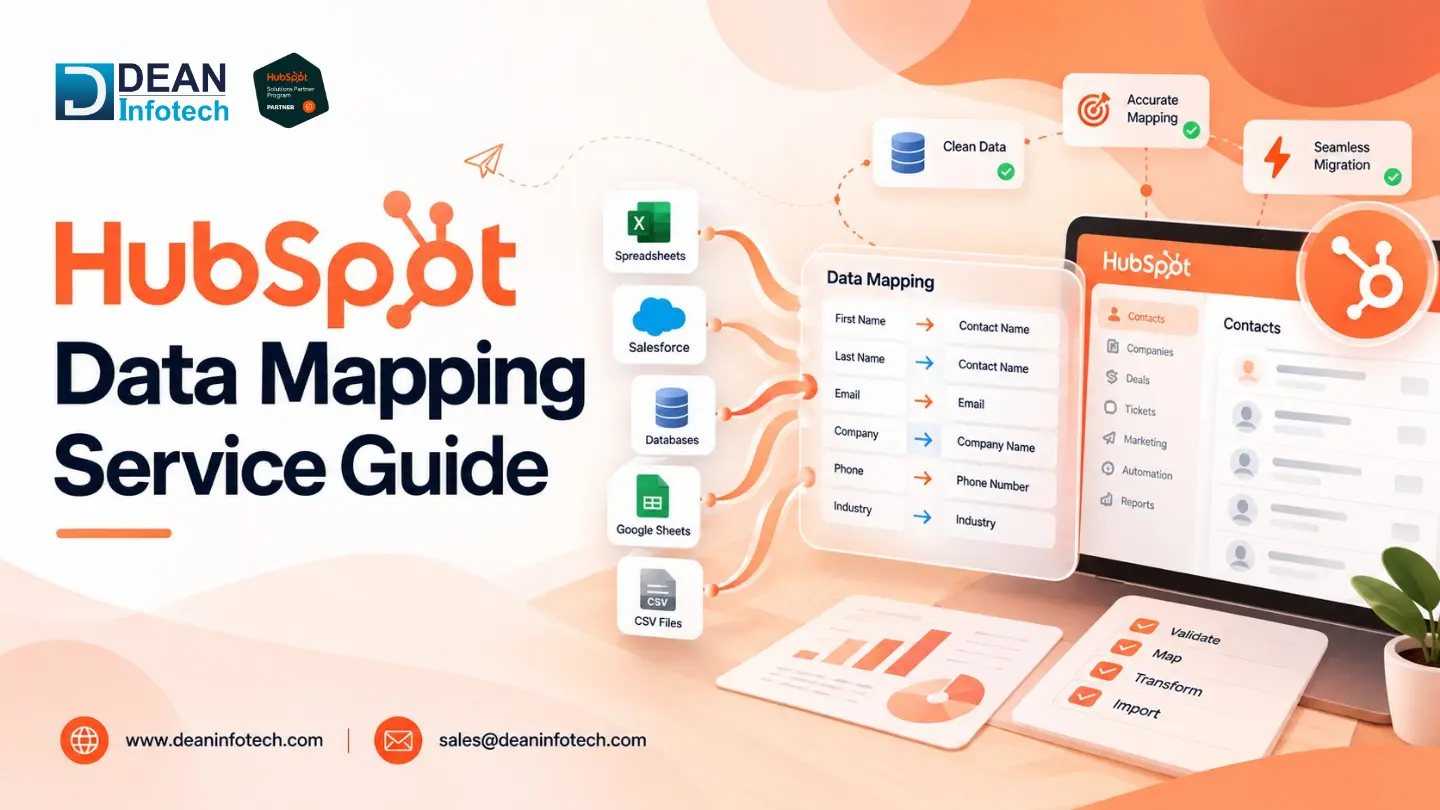
Most HubSpot problems that get blamed on the tool are really data problems. Reports that don't add up, duplicate contacts, deals with no company attached, workflows that fire on the wrong people. When you trace them back, the cause is often the same: data went into the CRM without a clear plan for where each piece belongs. That plan is what a HubSpot Data Mapping Service provides. This guide covers what data mapping is, why it matters, what a good service includes, when you need one, and which mistakes to avoid. What Is HubSpot Data Mapping? Short Answer: Data mapping in HubSpot involves the alignment of fields from the source systems (excel sheets, o

Read More
How to Audit Your HubSpot CRM: A Complete Step-by-Step Guide

How to Audit Your HubSpot CRM: A Complete Step-by-Step Guide

Gaurav SaxenaGaurav Saxena

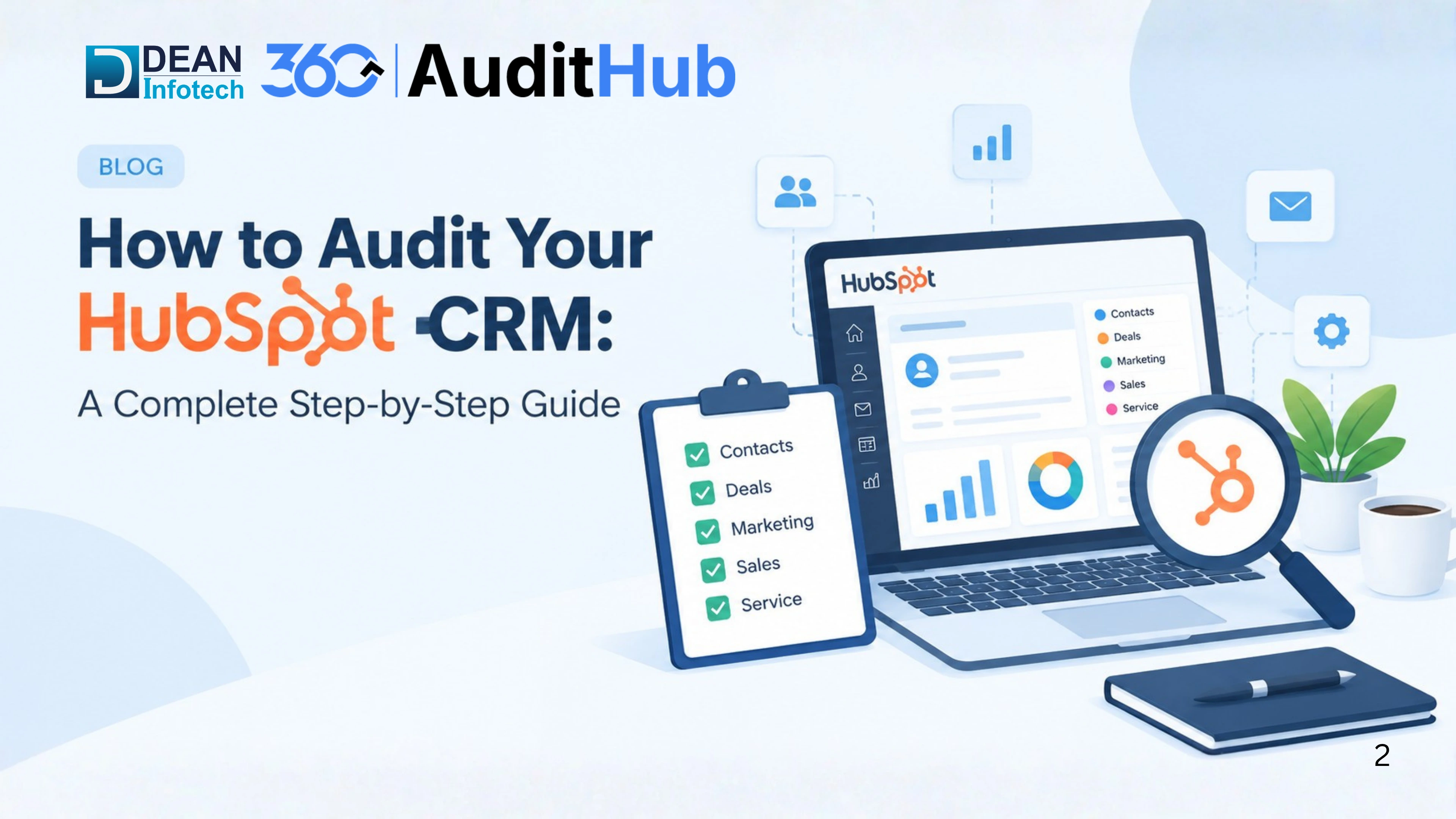
Most HubSpot portals don’t break overnight. They drift. A property gets created for one campaign and never used again. Two reps add the same company a week apart. A workflow built for last year’s process keeps enrolling contacts anyway. Nobody notices until a report looks off or an email goes to the wrong list. That’s usually the moment someone says, “we need a HubSpot CRM audit.” This guide explains what a HubSpot CRM audit covers, why it’s worth the time, and how to run one yourself, step by step. It also shows how 360 Audit Hub, a HubSpot audit app from Dean Infotech, does the same job from one place. What Is a HubSpot CRM Audit? A HubSpot CRM audit is a structured review of how your portal is configured and how clean the data inside it is. You check records, properties, workflows, users, integrations, and reports, write down what’s broken, unused, or risky, and rank the fixes. Here’s the manual process, in the order that tends to work best. Step 1: Check data quality. Start with the records. Look for duplicate contacts and companies, blank values in fields your team relies on (owner, lifecycle stage, email), and formats that don’t match,

Read More
HubSpot Onboarding Mistakes That Cost Teams Months of Wasted Setup

HubSpot Onboarding Mistakes That Cost Teams Months of Wasted Setup

Gaurav SaxenaGaurav Saxena

Most HubSpot onboarding problems don't show up on day one. The portal looks fine. Contacts are imported, a few workflows are running, everyone has a login. Then three months later, reps are ignoring the CRM, two reports show different revenue numbers, and someone is rebuilding the lifecycle stages for the second time. That rework is the real cost of HubSpot implementation mistakes. The license fee is the small part. The expensive part is the lost time, the bad data that spreads, and the team that stops trusting the system. This post covers the eight mistakes that do the most damage during HubSpot onboarding, and what to do about each one. If you'd rather have specialists set it up properly the first time, our HubSpot onboarding services <span style="background-color:transparen

Read More
Salesforce Automation: Which Business Processes Should You Automate First?

Salesforce Automation: Which Business Processes Should You Automate First?

Bharat KhatriBharat Khatri

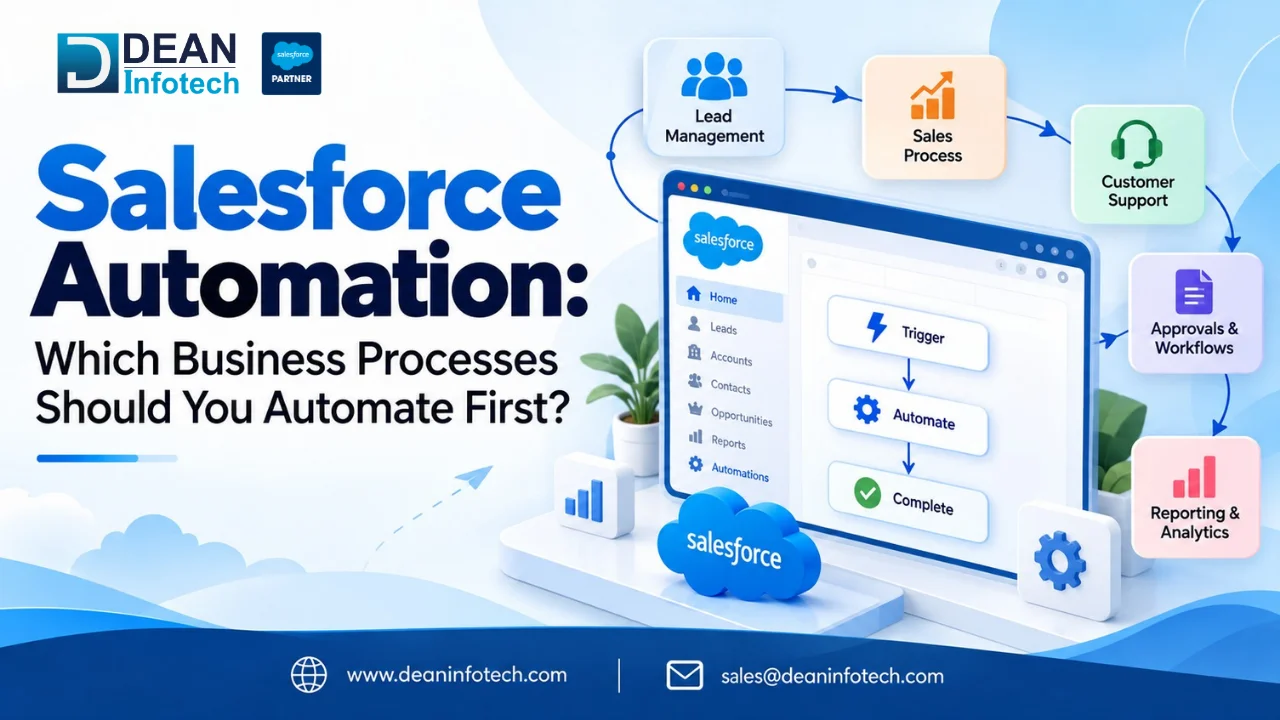
Start Salesforce automation with high-volume, rule-based, repetitive processes, such as lead routing, approval workflows, and data entry, because they deliver the fastest return with the lowest risk. Salesforce gives you several ways to automate, including Flow Builder, approval processes, and Einstein-powered tools (Process Builder is largely retired), but automating everything at once wastes budget, confuses teams, and can break workflows that already work. With 91% of organizations reporting that demand for automation from business teams has grown over the past two years , the real question is where to start. This guide shows how to identify which business processes are worth automating first, a simple framework to prioritize them, and ten high-impact use cases to begin with, whether you build in-house or work with

Read More